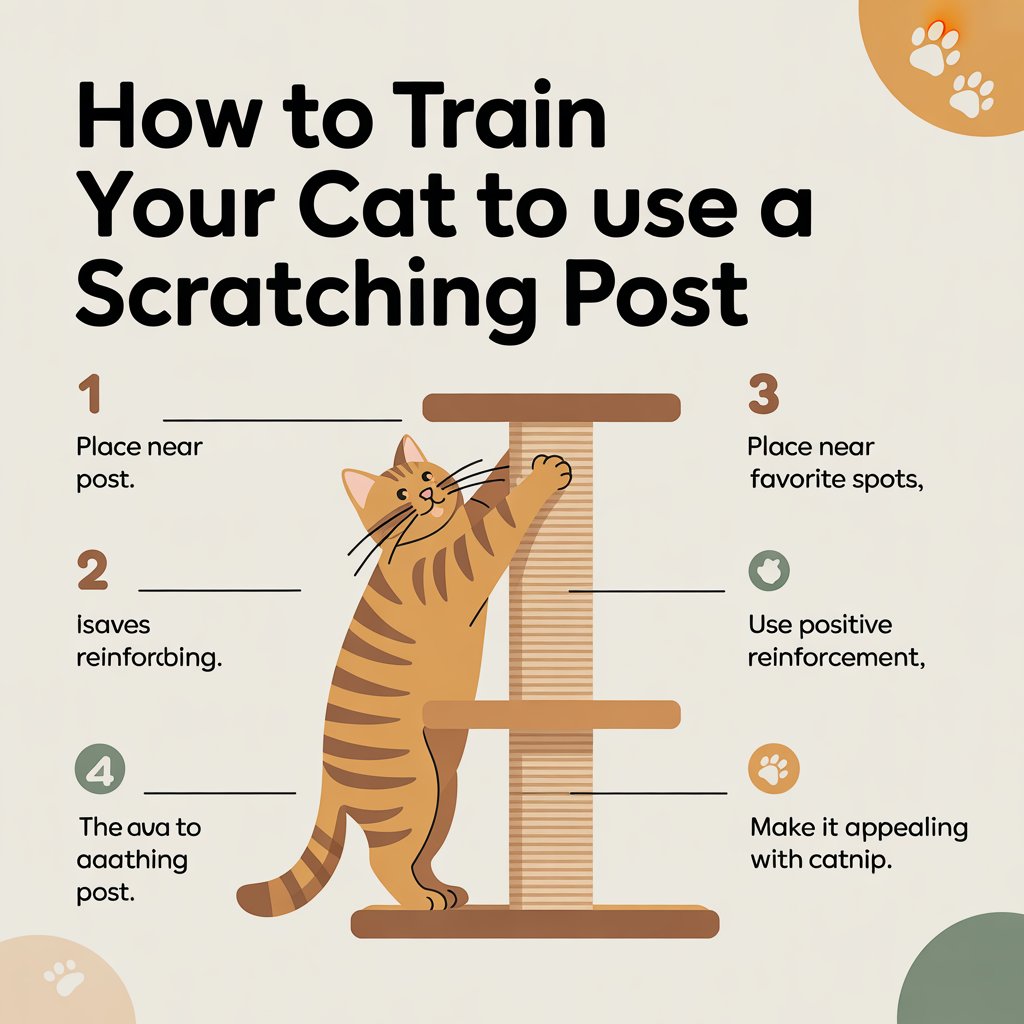
Training your cat to use a scratching post is one of the best things you can do for your home, your furniture, and your pet’s overall well-being. Scratching is a completely natural behavior for cats. They scratch to stretch their muscles, mark territory, sharpen their claws, and reduce stress. If your cat is scratching your sofa, carpets, or bed, the issue is not bad behavior—it’s simply that your cat needs a better outlet. With the right strategy, environment, and patience, you can easily teach your cat to prefer the scratching post over household items. This guide will show you step-by-step how to successfully train your cat using positive reinforcement and proven behavior techniques.
Why Cats Need a Scratching Post
Understanding why your cat scratches is the first step in proper training. Scratching offers several benefits:
- It removes dead outer layers of nails.
- It stretches the legs, back, and paw muscles.
- It helps relieve stress and anxiety.
- It marks territory through scent glands in the paws.
- It provides mental stimulation and physical activity.
A scratching post is not optional—it’s an essential tool that supports your cat’s natural instincts and improves home harmony.
Choose the Right Type of Scratching Post
Before training begins, you must choose a post your cat actually wants to use. The wrong scratching post is the #1 reason cats ignore it.
1. Height
Pick a scratching post that is tall enough for your cat to stretch fully—at least 30 inches for adult cats. Cats love to scratch while standing tall.
2. Stability
A wobbly post will never work. It must feel solid and steady. If it shakes, your cat will avoid it.
3. Material
The best materials include:
- Sisal fabric (top choice for durability and texture)
- Sisal rope
- Corrugated cardboard (cats love the sound)
- Carpet, but only if your cat doesn’t already scratch carpet at home
Sisal fabric tends to be the most effective because it creates long, satisfying scratch lines.
4. Horizontal vs. Vertical
Some cats prefer vertical posts. Others like horizontal scratchers. Many enjoy both. If you’re unsure, offer one of each to discover your cat’s preference.
5. Multi-surface Cat Trees
A cat tree with sisal posts, platforms, and hiding spots is ideal because it provides scratching plus mental stimulation, climbing, and resting areas.
Place the Scratching Post in the Right Spot
A common mistake is placing the scratching post in an isolated or hidden corner. Cats scratch where they spend time—not in unused areas.
Place posts:
- Near furniture your cat already scratches
- In the living room or areas with family activity
- Next to windows or sleeping areas
- Near your cat’s favorite resting spot (cats stretch and scratch after naps)
If your cat scratches your couch, place the post right beside the couch. This increases the chance your cat will naturally switch to the post.
Use Cat Attractants to Encourage the Behavior
Training becomes easier when you make the scratching post irresistible.
Use:
- Catnip (sprinkle or spray)
- Silvervine (more powerful than catnip)
- Cat-attractant spray (herbal, safe, and highly effective)
You can rub catnip into the post or spray the surface lightly. This encourages curiosity and sniffing, which often leads to scratching.
Teach Your Cat Through Positive Reinforcement
Cats respond best to rewards—not punishment. Never yell, spray water, or physically stop your cat from scratching furniture. Instead, guide behavior toward the post.
Steps to Train Your Cat
1. Introduce the Post Gently
Show the post to your cat by scratching it yourself or tapping the surface. Cats often mimic the action.
2. Use Treats and Praise
Whenever your cat approaches or sniffs the post, offer praise and a treat. This builds a positive connection.
3. Reward Every Scratch
In the early days, reward every time your cat touches the post—treats, affection, or playtime.
4. Encourage Stretching
Hold a treat above the post so your cat stretches upward. This often triggers scratching.
5. Use Toys to Guide the Movement
Feather toys or wands can be moved gently over the scratching area to encourage your cat to swipe.
Redirect Improper Scratching
If your cat scratches furniture, calmly redirect them:
- Say a soft “no” (no yelling).
- Walk to the scratching post.
- Use toys or treats to guide them to it.
- Reward when they scratch the correct surface.
Consistency is key—repeat the process daily.
Use Furniture Protection During Training
While training is in progress, protect your furniture using:
- Double-sided tape
- Furniture-protecting plastic film
- Couch guards
- Slipcovers
Cats dislike sticky textures, so tape is especially effective. Once your cat uses the post consistently, you can remove the barriers.
Provide Multiple Scratching Posts
If you have more than one cat, provide multiple posts. Even in a single-cat home, two to three scratching options increase success, especially in different rooms.
Keep the Scratching Post Fresh
Old, torn, heavily scratched posts are not a problem—cats actually love them. But make sure the structure stays sturdy. Replace only when the material becomes too worn to scratch.
If your cat gets bored, refresh interest by:
- Adding new catnip
- Rotating scratchers between rooms
- Introducing new textures
Avoid Common Training Mistakes
Many owners fail because of small errors. Avoid these mistakes:
- Buying a short, unstable scratching post
- Hiding the post behind furniture
- Punishing the cat
- Expecting instant results
- Using only one post in a large home
Cats learn at different speeds. Some take hours, others take weeks. Patience always pays off.
Training Kittens vs. Adult Cats
Kittens are very quick learners. Introduce scratching posts early, especially after play sessions.
Adult cats may take a bit longer, especially if they have strong habits. In such cases:
- Offer more rewards
- Use strong cat attractants
- Try different scratching surfaces
Older cats can still learn—just allow more time.
Why Positive Reinforcement Works Best
Positive reinforcement builds trust and motivation. Your cat learns that using the scratching post leads to good experiences—treats, praise, play, and attention. Over time, the cat develops a natural preference for the post even without rewards.
Adding Multiple Training Tools
To improve training success, add:
- Cat trees (scratching + climbing)
- Scratching pads near doors and windows
- Interactive toys to reduce stress
- Calming pheromone diffusers for anxious cats
A calm, enriched cat scratches more appropriately and less destructively.
Understanding Persistent Problems
If your cat still avoids the post:
- Try a different material (switch from sisal rope to sisal fabric).
- Try a taller or sturdier post.
- Move the post to a more visible area.
- Refresh catnip weekly.
- Provide additional playtime to reduce stress.
- Check for anxiety triggers.
In rare cases, consult a vet if your cat shows signs of severe stress or compulsive scratching.
Final Thoughts
Training your cat to use a scratching post is absolutely achievable with the right tools, patience, and positive reinforcement. Choose a strong, tall post with the right material, place it in the perfect spot, and use rewards to build a strong habit. With time, your cat will naturally prefer the scratching post and your furniture will stay protected. Consistency and kindness are the keys to success.
Comment here