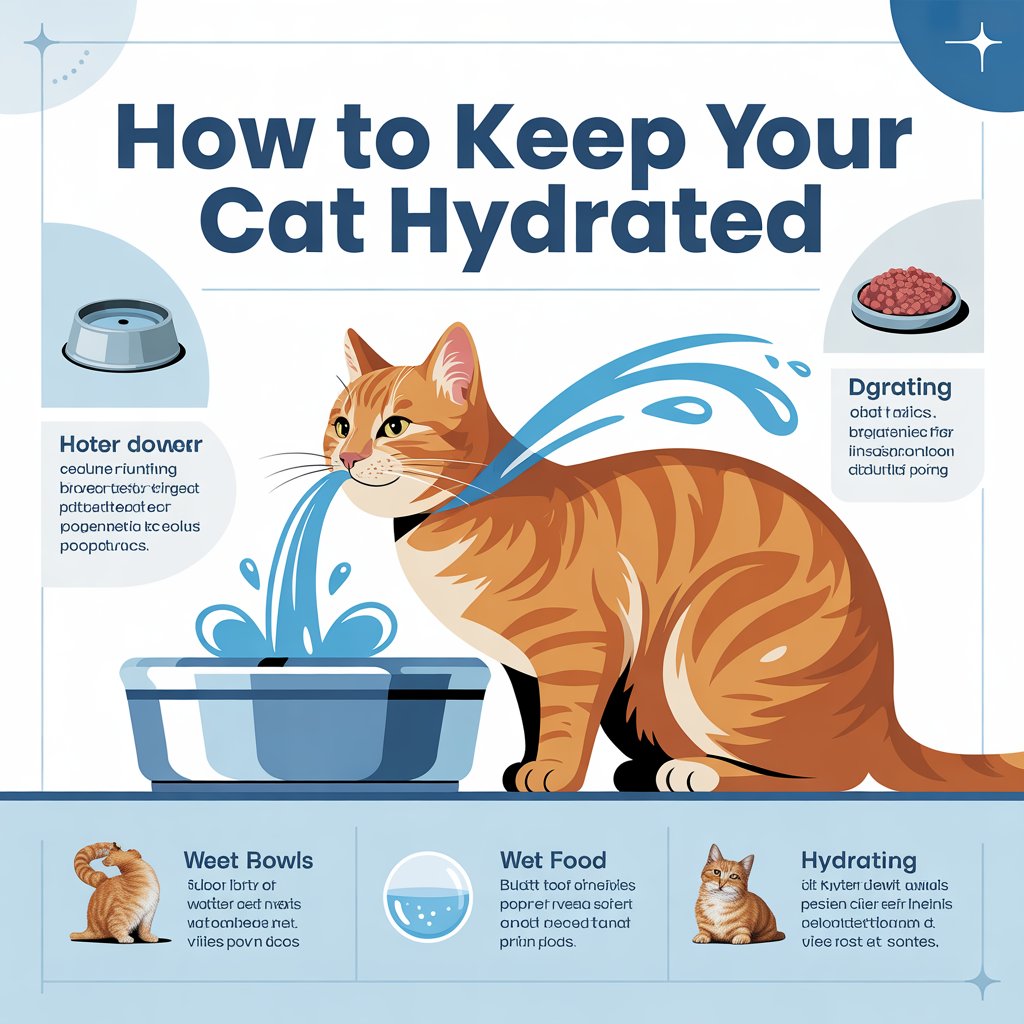
Keeping a cat properly hydrated is one of the most important parts of maintaining overall feline health. Many cat owners don’t realize that cats naturally have a low thirst drive because their ancestors survived in desert environments. Domesticated cats still carry those instincts, which means they often don’t drink enough water on their own. Dehydration can lead to urinary tract problems, kidney issues, digestive discomfort, and general lethargy. Understanding how to encourage better hydration can help your cat live a healthier and more comfortable life.
This guide explains why hydration matters, how much water a cat needs, early signs of dehydration, and practical strategies to increase your cat’s daily water intake.
Why Hydration Is So Important for Cats
Water plays a critical role in almost every bodily function, including temperature regulation, digestion, joint lubrication, nutrient transportation, and waste removal. When cats don’t drink enough water, their bodies struggle to flush toxins and maintain normal organ function. This is especially true for their kidneys, which are sensitive and prone to disease.
Proper hydration is also essential to prevent urinary tract infections, bladder stones, and urinary blockages, conditions that can be painful and sometimes life-threatening. Even mild chronic dehydration can put unnecessary strain on a cat’s kidneys over time.
How Much Water Your Cat Needs Daily
On average, a healthy adult cat needs about 3.5–4.5 ounces of water per 5 pounds of body weight each day. This includes water from both drinking and moisture in food.
For example:
- A 10-pound cat needs about 7–9 ounces of water in total per day.
Cats on dry kibble diets need more drinking water than cats who eat wet food. Wet food contains around 70–80% moisture, while dry kibble only contains 8–10%.
Because cats hide discomfort naturally, dehydration can be hard to spot. Watch closely for these signs:
- Sunken or dull-looking eyes
- Dry or sticky gums
- Lethargy or unusual tiredness
- Loss of appetite
- Panting
- Thick or sticky saliva
- Reduced skin elasticity (skin stays up after gently lifting at the shoulders)
- Strong-smelling urine or reduced urine output
If your cat is showing multiple signs, reach out to a vet promptly.
Best Ways to Keep Your Cat Hydrated
1. Switch to High-Moisture Wet Food
The easiest and most effective way to improve hydration is to incorporate more wet food into your cat’s diet. Canned food naturally contains enough moisture to support kidney and urinary health.
If your cat refuses wet food:
- Try warming it slightly.
- Add a bit of tuna water (not oil).
- Experiment with different textures like pâté, shreds, or gravy styles.
Even replacing one dry meal with wet food can make a noticeable hydration difference.
2. Add Water or Broth to Food
Mixing a tablespoon or two of fresh water into wet or dry food can increase moisture intake. Many cats don’t mind the extra liquid once they’re used to it.
You can also add unsalted, cat-safe broth (plain chicken or bone broth with no seasoning, onion, or garlic). The flavor encourages even picky cats to consume more fluids.
3. Use a Cat Water Fountain
Cats are naturally drawn to moving water. Many prefer fountains over stagnant water bowls because:
- It smells fresher
- It tastes cleaner
- The sound stimulates curiosity
A water fountain can dramatically increase daily drinking, especially for cats who rarely visit a still bowl.
4. Keep Multiple Fresh Water Stations Around Your Home
Place bowls in different rooms to make drinking easy and convenient. Ideally:
- Keep bowls away from litter boxes
- Avoid placing them next to food, as some cats dislike this
- Use wide, shallow bowls to reduce whisker fatigue
Refresh the water daily and clean the bowls frequently to prevent bacterial buildup.
5. Try Different Bowl Materials
Some cats dislike plastic bowls because they retain odors. Better options include:
- Stainless steel
- Ceramic
- Glass
Cats can be surprisingly particular, so testing different bowl types may help identify what they prefer.
6. Add Ice Cubes to the Water Bowl
Some cats enjoy batting at or licking ice cubes. Ice keeps water cold and can make drinking more interesting. You can even freeze broth into ice cubes for added flavor.
7. Flavor the Water Lightly
A tiny splash of:
- Tuna water (from tuna packed in water, not oil)
- Low-sodium chicken broth
- Cat-safe fish stock
… can make your cat more willing to drink. Always avoid anything containing garlic, onion, excessive salt, or artificial additives.
8. Offer Hydrating Cat Treats
There are several cat-safe, moisture-rich treats such as:
- Churu-style lickable treats
- Hydrating mousse treats
- Frozen broth snacks
These contain high water content and can be given as supplemental hydration.
9. Maintain a Clean Environment
Cats are naturally clean animals. If a bowl smells bad, is dusty, or has floating debris, your cat may avoid it. Keeping bowls spotless can make a major difference.
10. Adjust the Temperature of Water
Some cats prefer room-temperature water, while others like cold water. Test both to see what your cat naturally prefers.
Hydration Tips for Senior Cats
Older cats are more prone to dehydration because:
- Their kidneys are less efficient
- They may have reduced mobility or appetite
- Some medications increase water needs
For senior cats:
- Choose foods with high moisture levels
- Use fountains
- Add broth regularly
- Place water bowls on every floor of your home
Hydration support becomes even more essential with age.
Hydration Tips for Sick or Recovering Cats
Illness, especially vomiting, allergies, kidney problems, or urinary issues, often increases fluid needs.
You can help by:
- Feeding moisture-rich diets
- Providing broth
- Encouraging frequent small meals
If your cat refuses water completely or becomes severely dehydrated, contact a veterinarian immediately. In some cases, they may require subcutaneous fluids.
Why Cats Naturally Drink Less Water
Understanding feline behavior helps explain hydration challenges. Cats evolved in the desert and received most of their moisture from prey with high water content. Modern dry diets work against this natural instinct, so they need encouragement to drink more.
Additionally, many cats avoid water bowls placed near:
- Washing machines
- Noisy appliances
- High-traffic areas
- Dirty surroundings
Creating an inviting environment encourages more frequent drinking.
Creating a Hydration-Friendly Home Routine
To maximize hydration, try building a simple daily routine:
- Refresh water bowls every morning.
- Serve at least one wet meal per day.
- Add a small amount of water or broth to food.
- Check water levels throughout the day.
- Keep the fountain running and clean weekly.
A consistent routine helps your cat form healthy hydration habits.
When to Seek Veterinary Help
Contact a vet if you notice:
- Persistent dehydration signs
- Vomiting or diarrhea
- Refusal to drink water for more than 24 hours
- Sudden change in urination habits
- Strong-smelling urine
- Pain while urinating
- Lethargy or confusion
A professional evaluation ensures no underlying medical condition is contributing to low hydration.
Conclusion
Keeping your cat hydrated plays a fundamental role in supporting kidney health, promoting good digestion, preventing urinary issues, and maintaining overall vitality. With simple daily steps like offering wet food, using fountains, placing multiple water bowls in convenient spots, and adding hydration-boosting treats, you can drastically improve your cat’s water intake.
Hydration is not just a routine—it’s one of the most important long-term investments in your cat’s well-being.
Comment here