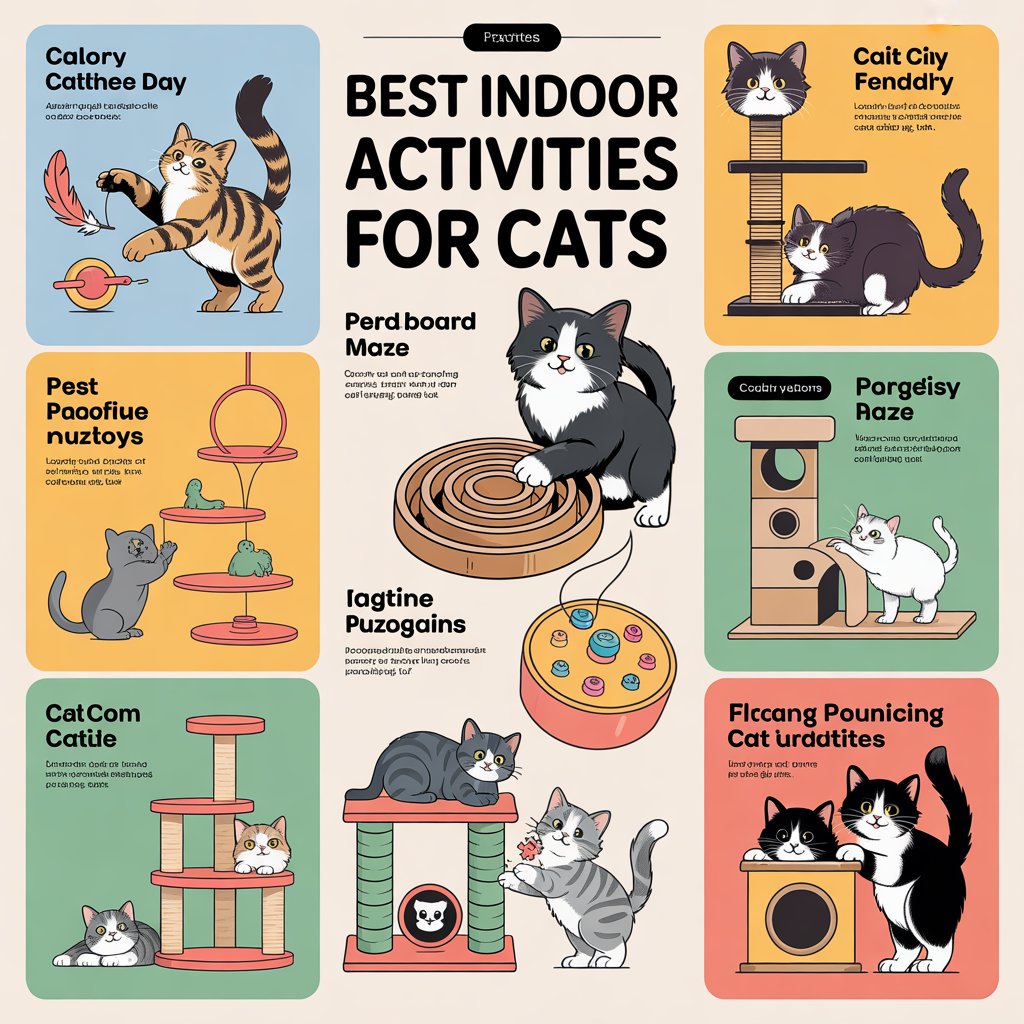
Keeping a cat active indoors is one of the best ways to maintain its physical health, reduce stress, and prevent behavioral problems. Many cat owners worry that indoor cats may feel bored or under-stimulated, but the truth is that cats can enjoy a rich, engaging life without ever going outside. With the right indoor activities, toys, and environmental enrichment, your cat can stay happy, confident, and mentally sharp.
Indoor activities are especially important for kittens, senior cats, and high-energy breeds like Bengals, Siamese, and Abyssinians. These activities support healthy weight management, reduce destructive scratching, and strengthen the bond between you and your cat. Below is a complete guide to the best indoor activities for cats, designed to help pet owners create a fun, safe, and stimulating home environment.
Interactive Playtime With Wand Toys
Wand toys—such as feather teasers, ribbon chasers, and bird-like lures—are one of the most effective indoor play tools. These toys activate your cat’s natural hunting instincts and encourage physical movement.
Swing the wand low across the floor, dart it behind furniture, or make it “fly” like a bird to mimic real prey. Aim for two to three short play sessions every day, as repeated play helps burn excess energy and prevents nighttime zoomies. Interactive wand play is ideal for shy or anxious cats because it boosts confidence as they “catch” their toy.
DIY Puzzle Feeders and Food-Dispensing Toys
Puzzle feeders are one of the best indoor activities for cats who tend to eat too quickly or become bored throughout the day. These toys require your cat to solve a challenge before getting food, which provides both mental and physical stimulation.
Food-dispensing balls, spinning feeders, and slow-release toys work especially well for overweight cats or those needing more activity. You can even make DIY versions from empty cartons or paper towel rolls. Rotating puzzle toys weekly keeps your cat mentally engaged and prevents boredom from repetition.
Cat Trees and Vertical Climbing Structures
Cats love height, and vertical space is essential for indoor enrichment. A tall cat tree, wall-mounted shelves, or a window perch gives your cat a place to climb, rest, and observe the household from above. Vertical climbing reduces stress and provides a sense of security, especially in multi-cat homes.
Position climbing structures near windows so your cat can enjoy natural light and outdoor views. Watching birds, people, and moving objects helps keep indoor cats entertained for long periods.
Hide-and-Seek Games
Hide-and-seek is a simple but effective activity that works for cats of all ages. Hide treats around the house in small, safe areas and encourage your cat to “hunt” for them. This satisfies natural predatory behavior and provides gentle exercise.
You can also hide toys, crinkle balls, or catnip mice under blankets or behind pillows. The challenge encourages problem-solving skills and reduces anxiety.
Laser Pointer Chase Sessions
Laser pointers are great for cats who love fast, unpredictable movement. The quick red dot stimulates intense chase behavior and helps burn energy quickly. Keep laser play sessions short to prevent frustration.
Always end the session by switching to a toy your cat can physically catch. This gives your cat a sense of accomplishment and prevents stress buildup.
Cardboard Boxes and Paper Play
Simple household items like cardboard boxes, brown paper bags, and wrapping paper can entertain cats for hours. Cats enjoy hiding, jumping into boxes, and pouncing on crinkly paper. These items are inexpensive and excellent for cats that love tactile stimulation.
Cut different holes into boxes to create “peek-a-boo” tunnels or combine multiple boxes into a homemade obstacle course. The rustic textures of cardboard provide sensory engagement that cats naturally enjoy.
Cat Tunnels and Obstacle Courses
Cat tunnels offer safe, enclosed spaces where cats can hide, run, and play. These tunnels often come with crinkle sounds, peek holes, and expandable sections that keep your cat curious. You can combine tunnels with soft obstacles like pillows or cushions to create a full indoor course.
Encouraging your cat to run through the tunnel helps improve coordination, agility, and confidence.
Catnip, Silvervine, and Scent-Based Play
Cats respond strongly to scents like catnip and silvervine. These natural stimulants encourage energetic play and rolling behavior. Sprinkle catnip on scratching posts, toys, or play mats to refresh interest in older toys.
If your cat does not respond to catnip, silvervine is an excellent alternative and often works for cats resistant to traditional catnip.
Training Sessions for Mental Stimulation
Contrary to common belief, cats can be trained just like dogs. Training is one of the most productive indoor activities because it strengthens communication and improves behavior.
You can teach simple commands such as:
- sit
- high five
- come
- spin
- enter carrier
Use clicker training and small treats to reward your cat. Short training sessions sharpen your cat’s mind, reduce stress, and help them feel more secure.
Window Watching and Bird TV
Indoor cats love watching outdoor movement. Setting up a window perch gives your cat front-row access to nature. Add a bird feeder outside the window to create “bird TV,” which keeps your cat mentally entertained throughout the day.
For extra stimulation, play cat-friendly videos such as fish swimming, butterflies, or forest scenes on your TV or tablet.
Rotating Toy Schedule
Cats often lose interest if toys stay the same for too long. Rotate toys weekly so your cat always feels like it is discovering something new. Include different textures such as feathers, plush toys, rubber toys, and crinkle toys.
A rotation system prevents boredom, keeps the environment fresh, and encourages daily play.
Sniffing Mats and Foraging Play
Sniffing mats, also called snuffle mats, make your cat search for hidden treats among fabric strips. This is an enriching indoor activity because it simulates foraging behavior. It is also great for slowing down fast eaters.
For long sessions, hide low-calorie treats to avoid overfeeding.
Interactive Companion Toys
If your cat spends time home alone, consider interactive toys that move automatically. These include motion-activated balls, robotic mice, or battery-powered flutter toys. These toys trigger your cat’s play instinct even when you’re not available.
Soft Play Wrestling Toys
Cats need healthy outlets for kicking, wrestling, and biting behaviors. Kick toys, stuffed mice, and cat-safe plushies encourage safe wrestling play. These toys help reduce pent-up energy and prevent cats from biting furniture or hands.
Final Thoughts
Indoor activities are essential for supporting your cat’s physical and mental well-being. By offering a variety of enrichment options—climbing structures, interactive play sessions, puzzle feeders, scent toys, and training exercises—you can create a happy and stimulating life for your feline friend.
The key is variety, rotation, and consistency. With the right indoor environment, your cat will stay active, confident, and content, all while living safely inside your home.
Comment here